
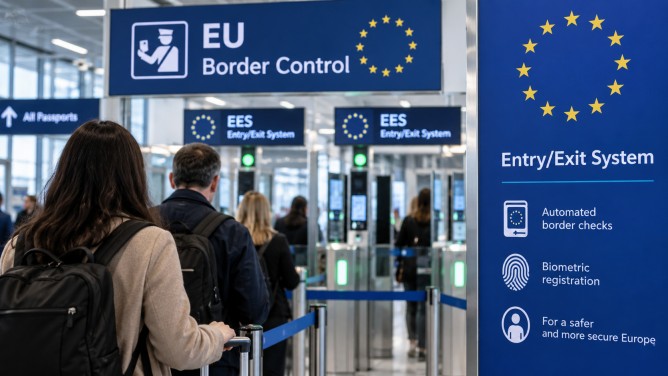
The European Union’s Entry/Exit System (EES), designed to tighten border security through biometric checks, is facing delays across several member countries. Originally launched in October, the system’s full implementation has been postponed in nine European nations, including France, Greece, Italy, and Portugal. These countries are seeking more time to accommodate the new requirements at their border crossings, especially in busy airports where technical and operational challenges have been significant.
The EES mandates that non-EU travelers entering the Schengen area have their fingerprints and facial images recorded. Despite its importance, the rollout has encountered hurdles, particularly in high-traffic locations. Countries such as Germany, Malta, the Netherlands, Switzerland, and Belgium have also requested additional time to address these challenges. In contrast, Spain has successfully implemented the system after overcoming initial issues.
EU officials report that the EES has already logged approximately 200 million registrations. The system has been effective in preventing around 70,000 individuals from entering the Schengen area, including those without valid visas, overstayers, and individuals using forged documents. However, implementation remains inconsistent, with some locations like the Eurostar terminals in Brussels and Antwerp port already conducting biometric checks, while others are still in preparation stages.
Major airports such as Frankfurt and Schiphol have started using biometric checks, though smaller airports continue to face infrastructure and capacity issues. The International Air Transport Association has voiced concerns about potential delays caused by the system, and airlines warn that extended queues could pose problems, particularly during peak travel periods.
To streamline the process, a pre-travel application called Travel to Europe is being introduced. This application allows travelers to submit their passport details and facial images before arriving at the border. Currently operational in Sweden and Portugal, it is expected to expand to other countries, potentially easing the transition to the biometric system.