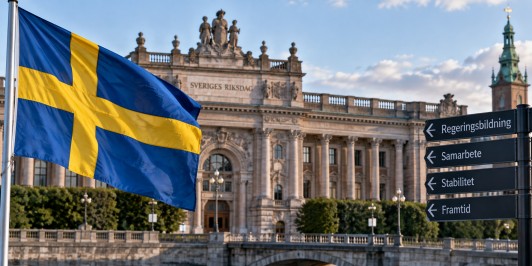
As Sweden navigates the aftermath of a tightly contested parliamentary election, coalition talks are underway with a slight advantage in favor of the centre-left bloc led by the Social Democrats. With nearly all votes tallied, they hold 176 seats compared to 173 for the right-leaning faction. Attention now shifts to overseas ballots, which could further influence the outcome expected later in the week.
Magdalena Andersson, leader of the Social Democrats, is actively engaging in coalition discussions in a bid to regain governing authority. Simultaneously, outgoing Prime Minister Ulf Kristersson is exploring avenues to maintain his centre-right coalition’s hold on power. The Centre Party emerges as a pivotal player in these negotiations, though its reluctance to collaborate with the Left Party poses a significant hurdle.
The Centre Party advocates for a stable government leaning towards centre-right policies and refuses to partner with what it considers marginal political entities. On the other side, several left-leaning parties back the idea of changing the government, cautioning against a political stalemate that might necessitate another election. The Sweden Democrats, despite their previous role in supporting the right-wing administration, have seen a dip in popularity, reducing their chances of joining the new government. Nonetheless, their stances on issues like immigration and crime continue to resonate in mainstream discussions.
Kristersson, awaiting the final election results, remains flexible in his approach. His party, the Moderates, along with allies, face the daunting task of securing a parliamentary majority, as the Liberals and Christian Democrats have dismissed any potential alliances with the Social Democrats. The Swedish parliament is set to convene on September 28, with the earliest vote for a new prime minister scheduled for the next day. Should these efforts to appoint a leader falter repeatedly, the country may have to brace for another election cycle.
Forming a coalition could be a lengthy process, potentially extending for weeks or months. The 2022 election saw a government formed after 37 days of negotiation, whereas talks following the 2018 election stretched to 134 days. With no clear majority, the balance of power may hinge on agreements involving the Centre and Left parties, which could ultimately determine the composition of Sweden’s next government.