
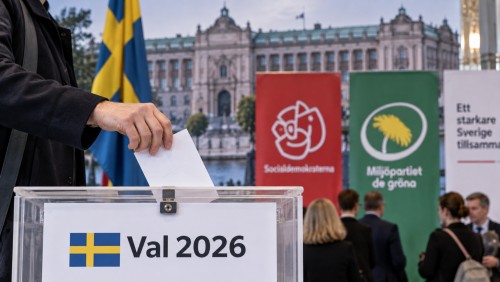
As political dynamics continue to evolve in Sweden, the recent election results signal a shift in parliamentary power. The red-green coalition, comprising the Social Democrats and other aligned parties, has gained a slight edge over the Tidö alliance, securing 176 seats in the Riksdag, compared to 173 for their opponents. These preliminary results highlight a subtle yet significant change in the country’s political landscape.
The Social Democrats led the opposition’s charge, receiving 28.0% of the vote, which translates to 99 seats in the Riksdag. Meanwhile, the Moderates, a key player in the Tidö alliance, garnered 19.8% of the vote, securing 70 seats. The Sweden Democrats followed closely with 17.5% and 62 seats, reflecting their continued influence despite a slight decline from the previous election.
Other parties also played pivotal roles in shaping the outcome. The Left Party, which gained six seats, now holds 30 in total, having received 8.4% of the vote. The Center Party captured 7.0% and 25 seats, while the Christian Democrats and the Green Party each secured 22 seats with 6.2% and 6.1% of the vote, respectively. The Liberals rounded out the seat distribution with 5.3% of the vote and 19 seats.
Voter engagement saw a modest increase, with turnout reaching 84.8%, up by 0.6 percentage points from the 2022 election. This heightened participation underscores the public’s vested interest in the country’s political direction.
These preliminary figures are subject to change as the final vote count is completed, which includes additional verification processes. This means the seat distribution could still be adjusted, reflecting a more precise depiction of Sweden’s political composition.