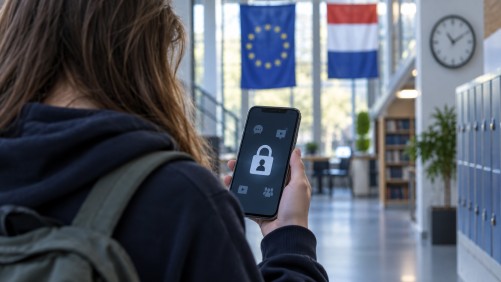
As European nations grapple with the complexities of digital safety for minors, the Dutch government has thrown its support behind an EU-wide initiative to establish a minimum age for social media use. This move aligns with broader efforts across the continent to harmonize regulations protecting young internet users.
The Netherlands, collaborating with Spain, has put forward proposals to the European Commission advocating for a unified minimum age requirement for accessing social media platforms. These proposals also emphasize the need for privacy-conscious age verification methods. The Dutch government is pushing for the enforcement of a minimum age of 15, with Digital Economy Minister Willemijn Aerdts asserting that online safety standards for children should mirror those in the physical world.
The European Commission is anticipated to unveil its proposals concerning the protection of children from the risks associated with social media as part of its ongoing digital policy discussions. This topic has gained urgency as individual countries implement or plan their own restrictions. Notably, Australia imposed a ban on social media use for those under 16 from December 2025, and France has initiated a similar restriction for children under 15 this month. In the UK, measures are set to limit social media access for under-16s starting in 2027.
While these efforts aim to safeguard young users, they have sparked debate among privacy advocates, particularly concerning the implementation of age verification systems. Earlier this year, the European Commission launched an age-checking application, which was quickly compromised by a security researcher, leading to a subsequent security update to address vulnerabilities.