
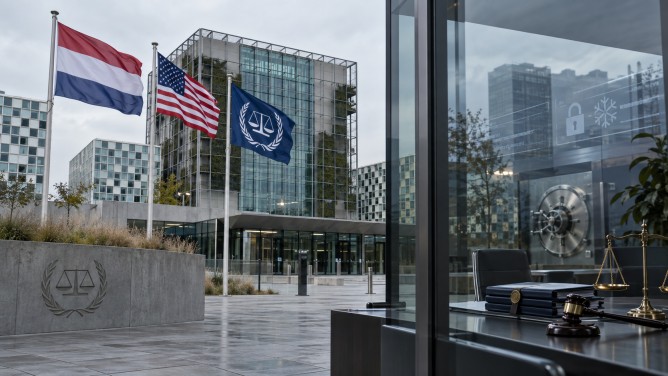
The international community is closely watching the escalating tension between the United States and the International Criminal Court (ICC), as potential new sanctions from Washington loom over the tribunal. The Netherlands, home to the ICC, is preparing contingency plans to support the court’s continued operations should these sanctions be enforced.
The Trump administration has already targeted several ICC officials with sanctions, objecting to investigations involving American and Israeli personnel. The dispute could soon extend to institutional-level sanctions against the ICC, which might disrupt its access to vital services such as banking, insurance, and technology, primarily provided by U.S.-based companies.
In response, the Netherlands is exploring measures to ensure the ICC’s functionality remains intact. This includes securing financial transactions, protecting witnesses, and maintaining detention facilities. Dutch officials are considering stepping in to support the court’s staffing and operational needs, reflecting their commitment as the host nation to uphold the ICC’s mission.
Simultaneously, the ICC itself has been strategizing to minimize potential disruptions by shifting some services away from American providers and reassessing its financial and technology frameworks. Such steps are deemed crucial to maintaining the ICC’s mandate to prosecute crimes like genocide and war crimes, especially when national jurisdictions are unable or unwilling to act.
Established in The Hague in 2002, the ICC plays a critical role in international justice. As the situation develops, the Netherlands and the ICC remain vigilant, aiming to safeguard the tribunal’s ability to fulfill its duties amid geopolitical tensions.