
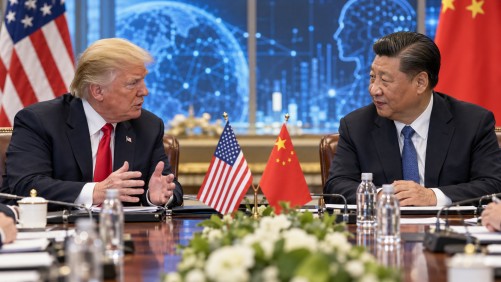
During a summit on September 25, US President Donald Trump and Chinese President Xi Jinping focused on the escalating conflict in the Middle East, as Iran proposed a seven-day plan aimed at easing tensions in the region. The discussion underscored the ongoing diplomatic challenges as Iran urged the United States to accept its plan, which includes reopening the crucial Strait of Hormuz.
China’s President Xi advocated for a return to the June framework that had previously led to a temporary ceasefire and encouraged renewed negotiations for a comprehensive resolution. Iran, in alignment with this call, presented its own peace initiative, which Iranian Foreign Minister Abbas Araqchi detailed would enable the reopening of the Strait of Hormuz and a cessation of hostilities, provided the United States agrees to the terms.
The Iranian proposal further demands the lifting of the US blockade on Iranian ports, the unfreezing of Iranian funds, and the removal of oil sanctions. While the United States has not publicly accepted the plan, it acknowledged that ongoing discussions through mediators remain constructive, especially concerning nuclear issues. However, Iran has maintained a firm stance on not conceding its nuclear program, including uranium enrichment activities.
In their conversation, President Trump warned President Xi against offering any form of support to Iran. US Ambassador to China David Perdue confirmed that China assured the United States it was not assisting Iran. The tensions in the region have notably disrupted energy flows through the Strait of Hormuz, heightening security concerns across the Gulf, Yemen, and Lebanon.
Amidst these developments, countries like Saudi Arabia, Pakistan, and Turkey have engaged in talks to enhance military and intelligence cooperation, responding to the broader security challenges posed by the ongoing regional conflict.