
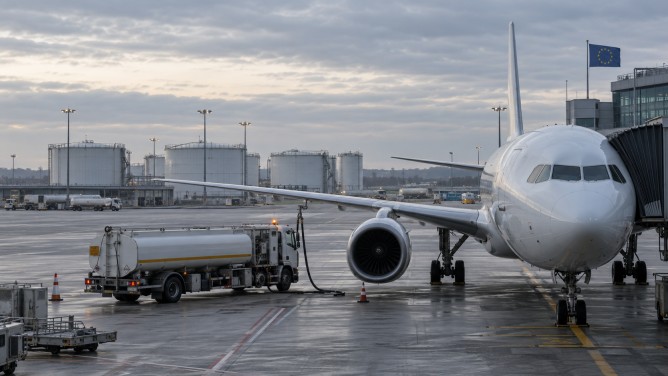
Europe is on the brink of a potential jet fuel shortage as regional reserves dwindle, despite an uptick in imports from Asia and other key suppliers. This looming deficit is exacerbated by disruptions in global energy markets, primarily driven by geopolitical tensions in the Middle East.
Recent data indicates that the jet fuel stocks in major European ports—Amsterdam, Rotterdam, and Antwerp—have plummeted to their lowest levels in seven years as of mid-September. Analysts predict that this could translate into a shortfall of approximately 510,000 barrels per day in the last quarter of the year, signaling challenging times ahead for the aviation industry.
While the Swedish Energy Agency maintains that supplies of gasoline, diesel, and jet fuel remain stable, it acknowledges the possibility of short-term constraints specifically affecting aviation fuel across Europe and Sweden. This cautious outlook underscores the precarious balance within the region’s energy supply chain.
Efforts to mitigate the shortage have seen a notable increase in jet fuel imports from Asia, with shipments reaching around 129,000 barrels per day in September. Furthermore, additional supplies from Canada, Nigeria, and the United States have contributed to alleviating immediate supply pressures. However, this is tempered by the persistent threat of rising oil and gas prices in Europe, partly due to attacks on energy infrastructure in Saudi Arabia.
As the region grapples with these supply challenges, the aviation sector in Europe remains vigilant, closely monitoring the evolving situation to navigate potential disruptions in the coming months. The interplay of regional stock levels and global market dynamics will be crucial in determining the trajectory of jet fuel availability in Europe.